Be yourself; Everyone else is already taken.
— Oscar Wilde.
This is the first post on my new blog. I’m just getting this new blog going, so stay tuned for more. Subscribe below to get notified when I post new updates.
Be yourself; Everyone else is already taken.
— Oscar Wilde.
This is the first post on my new blog. I’m just getting this new blog going, so stay tuned for more. Subscribe below to get notified when I post new updates.
“When asked why he never went for walks in the countryside, Socrates simply stared and replied that being by himself in lifeless Nature could never take the place of stimulating conversations with companions.” (Janaro & Altshuler) pg 480

I think his view of nature is skewed especially when he calls it lifeless as I see nature as so full of life. This only leads me to think his view on life must exclude nature as he regards conversation so highly in his regards. I just thought it was so interesting of a quote in how different our views on nature and life are.
“A love of New York is shared by those whose world is bounded by theatres, art galleries, musuems,”…” (Janaro & Altshuler) pg 480

The quote goes on to not mention nature and I just want to state that New Yorkers yearn for nature. Central Park is proof of that as priceless land is devoted to preserving it. I don’t know if the quote was talking about maybe before the preservation of land but, that was in 1857 so that would be an anti-industrialist view which would make since. The quote is so interesting in a sense of it could mean two different things.
“Native Americans enjoy a long tradition of a deeply spiritual relationship with Nature.” (Janaro & Altshuler) pg 486

I think America could use their views on nature and benefit from them greatly. I also want to just point out the lengths they will go to protect that which is scared to them. During the Dakota pipeline crisis which is where the picture is from the Native Americans camped for months before it got too cold and sent most of them home. The lengths they would go should prove how sacred the land is to their culture. It’s frustrating as a fellow American for me to watch our government not be able to understand this when it’s even taught in our Humanities class.
Janaro, R. P., & Altshuler, T. C. (2017). The Art of Being Human: the Humanities as a Technique for Living (10th ed.). Boston: Pearson.
“We mask our fears about our morality in the importance we place on the death of celebrities.” (Janaro & Altshuler) pg 448

Personally, I always thought it was weird how people mourned celebrities as if they knew them. As if it’s a significant moment in history and a sad one at that. I don’t really have any personal connection to any celebrities and I don’t feel as if I’m attached in any way so that might the reason why. I also am not obsessive over celebrities as many people are as I really couldn’t care as it has no effect on my life. I’m not trying say the sadness people feel when celebrities die isn’t real I just can’t relate to those emotions.
“A prevalent idea about death is that it doesn’t really exist, that life continues beyond the grave.” ( Janaro & Altshuler) pg 456

I think the concept of life after death is much easier for people to cope with rather then that life really does end and for this reason I think religion’s often use this as an exploitation. From Christianity with people being able to repent for their sins with money or other commodities. To rising terrorist groups promising eternal happiness in the afterlife in exchange for the lives of easily manipulated kids. Even Norse mythology had the concept of Valhalla to ensure fearlessness on the battlefield. All of these religions used the concept of an afterlife to bring fortune in the current life. I also, don’t believe that’s all these religions do as in pure practice almost all religions are peaceful.
“A contrary belief is that art should reveal the truth of human experience, some of it life-affirming, some of it not; and we harm ourselves by hiding from the truth.” (Janaro & Altshuler) pg441

I believe that humans learn from their past and without shedding light on all of the past good and bad we as a species will not learn collectively. The bad is just as necessary as the good in my eyes. The worst parts of humanity are what we can learn the most from so that we don’t repeat the same mistakes. I believe in our current society we try and protect people and not share the bad and this only weakens our society as a whole.
Janaro, R. P., & Altshuler, T. C. (2017). The Art of Being Human: the Humanities as a Technique for Living (10th ed.). Boston: Pearson.
“One of the world’s most beautiful buildings, the glorious Taj Mahal mausoleum in Agra, India, is evidence of the love of one man, Shah Mumtaz, for his favorite wife” (Janaro & Altshuler) pg 409

I just want to focus on the part where it says his favorite wife which implies he had more then one. At first I thought how could he truly love her if he had more then one women in his bed but, that’s just how the culture I’ve been raised in views love as being an unbreakable bond between two and all of your love goes towards your significant other. I had to open my mind to try and understand how a man with possibly a harem of women could truly love one of his wives. In modern culture this would obviously be frowned upon but, in the times that he built the Taj Mahal harem’s were the norm for men in power and almost a sign of wealth/power. India is also a very culturally diverse compared to America so my view is biased and therefore almost irrelevant as he probably did love her or he was in trouble with her I honestly can’t decide.
“The debate continues over whether what we call “love” can mean anything more than lust” (Janaro & Altshuler) pg 411
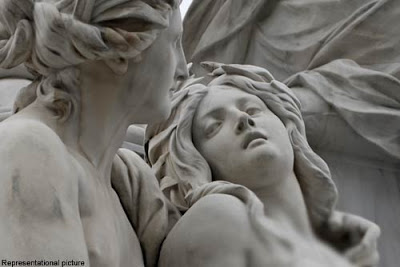
I think the line between love and lust is very blurry especially for hormonal young people. People want to believe they are in love as it’s heavily romanticized but, these feelings are often just the desires of lust. I believe one can love somebody and lust for them as its only natural to be attracted to the one you love. At the same time though I think people misinterpret their lust for love because they want to believe they are in love when the only thing the relationship revolves around is the lust for one another. I think my generation has a huge problem with this thinking that they have found the love of their life when they just both find each other sexually attractive.
“It was expected that every well-bred gentleman of means would keep at least one mistress” (Janaro & Altshuler) pg 415

I just find it funny that during a time when church was of utmost importance and adultery was considered a sin people would just turn the cheek and feign indifference over men being able to commit adultery. Now if a women had men as her mistresses I think she’d probably be burned at the stake during the 1700s. These two polar opposites in what is morally right at the time just are almost laughable. As in they have all these things your supposed to do if you are a Christian or not to do but, it’s alright if the wealthy gentlemen are lustful and keep a couple extra ladies close to them. I could almost hear “boys will be boys” as I read this quote and just goes to show how corrupt the Christian faith is at it’s core.
Janaro, R. P., & Altshuler, T. C. (2017). The Art of Being Human: the Humanities as a Technique for Living (10th ed.). Boston: Pearson.
“Most ancient cultures shared the belief that music was a vital component of the natural world, a gift from heavenly beings. One theory is that for very early people natural sounds were the voices of the gods, and human song was developed to imitate their voices.” (Janaro & Altshuler)pg155

I think through this perspective you can start to understand early cultures better and also understand the importance of the natural world to them. For American Indians rituals often involved the imitation of natural sounds. Drums used by tribes that roamed the Midwest are said to imitate the sounds of horses or buffalo hooves as they galloped across the plains. Both horses and buffalo played intricate parts in everyday lives of these people so it’s only natural that these sounds were integral in their music. I see it almost as a way to give back and celebrate the world around them.
“The music of Africa made possible the evolution of jazz and blues, two art forms that allow for maximum freedom of expression.” (Janaro & Altshuler)pg157
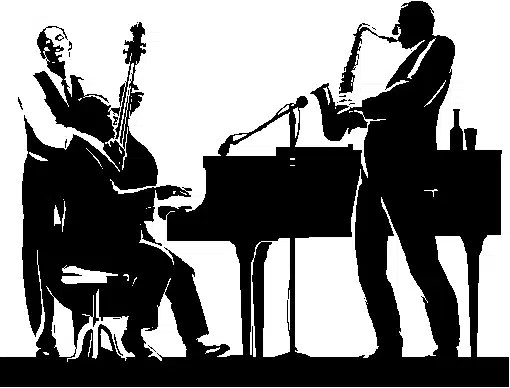
I think blues and jazz were created to allow for a maximum freedom of expression because the culture that made them were oppressed and had no platform to express themselves. As during the beginnings of both movements African Americans were free but, didn’t share the same privileges as white people at the time. I see blue’s as a way to express the sadness and sorrows that generations of Africans had suffered. While jazz was almost in defiance of the oppression. I see it as you can oppress us and take away our basic human rights but, you can never take away our happiness.
“Beethoven is believed to have dedicated his Third Symphony to Napoleon, depicted in Jacques Louis David’s portrait, then rescinded the dedication when word reached the composer that Napoleon had declared himself emperor.” (Janaro &Altshuler) pg167

I just thought that this was interesting in a sense of music being a way to get a feel for the perception of how people saw Napoleon before and after he declared himself Emperor. As Beethoven was gonna dedicate one of his most famous pieces of work to Napoleon for his accomplishments but, after the crowning he immediately rescinds the dedication showing that Napoleon was taking his power too far. Napoleon isn’t seen as hero of myth or worth the dedication of a masterpiece as he is now seen as a power hungry general who over stated his bounds.”
Citations:
Janaro, R. P., & Altshuler, T. C. (2017). The Art of Being Human: the Humanities as a Technique for Living (10th ed.). Boston: Pearson.
“Sophonisba Anguissola (c.1532-1626) and her five sisters were all trained artist, but she was the first female to achieve an international reputation for her art” (Janaro & Altshuler)pg120

I find it astonishing that she is the first female to achieve an international reputation for her art. Not because her artwork was bad or that she didn’t deserve it. It’s just crazy that females weren’t allowed the same artistic privileges until around 500 years ago. I can only ponder the amount of art or artistic views that we never got to see because of it. I would say that until females were given the same artistic platforms that men had already, we only got the male perspective on the world. I don’t think men see the world the same as a women nor could they express in the same light how women see the same things.
“Guernica, shown here, is now considered not only Picasso’s masterpiece but one of the great artworks of all time.” (Janaro & Altshuler)pg124

I don’t think our book does this masterpiece justice. Without the back story of what happened to the town of Guernica this is just a depiction of suffering. When supplemented with what happened to the inhabitants it depicts the last moments of thousands of innocent civilians dying at the hands of the fascist movement. My personal favorite part is how the light doesn’t really light up the room it’s dim and doesn’t really spread light throughout the painting. I personally interpreted this as the world’s view of what’s going on in Spain at this time. The world had no clue how truly horrible the fascist revolution was in Spain. They only saw a dim shallow view of what was really going on. The light is just one of the many things that can be put up for interpretation but, that’s why I think this is such a good piece as it not only makes the viewer think about what they are seeing it also had a political rhetoric of informing people internationally.
“Hopper does not give us a perfect likeness of a diner in Nighthawk, but the few figures are all he needs to tell his sad stories.” (Janaro & Altshuler)pg138
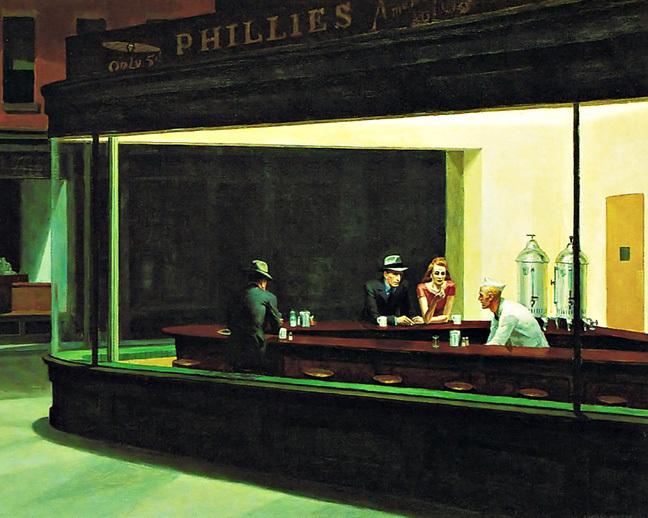
I just thought it was incredible how with such little this painting says so much. From all the empty seats to the hunched over man. Nighthawk just depicts the gloomy mood of the Great Depression something that many authors of the time had tried to do with 100 of pages of words. While, Hopper depicts the same mood with just a simple elegancy that can’t be replicated. Even the couple who should be having a fun night drinking seem almost the most sad by how much fun they are not having. They women with her red dress seems so out of place with the surrounding sadness that seems to envelope the painting.
Citations:
Janaro, R. P., & Altshuler, T. C. (2017). The Art of Being Human: the Humanities as a Technique for Living (10th ed.). Boston: Pearson.
“We can suppose that early (very early) people were dancing, chanting and pounding away with stones and sticks. And there music and dance! It is hard to imagine, however, that some form of literature did not happen along with these other arts.” (Janaro & Altshuler 2017)pg69

It is also hard to imagine any form of literature without a language. Now I don’t think these primitive humans went without a form of communication but, I wouldn’t say it was anything past basic communication. I don’t think they could express emotions with such basic language which I think is a necessity for any form of literature.
“Enkidu finally dies in the story, but Gilgamesh lives on, undefeated, and still a mortal problem for the immortal gods. Was the author saying that even though kindness is a necessary element in the human personality it is less likely to outlast aggressiveness.”pg71 (Janaro & Altshuler 2017)

I think that during the time this was written around 2100 BC aggressiveness was viewed as strength. While kindness was viewed as being weak. I think that what the author was trying to say is while humans are both kind and aggressive the aggressive trait is the more favorable. I also think aggressiveness is viewed differently during this age not as warmongering but, the ability to adequately make war thus protecting your people.
“Does evil fascinate even as it terrifies?”pg84 (Janaro & Altshuler 2017)

The best example of evil fascinating people is the case of Ted Bundy. Sociopath turned mass murderer who captivated America with his charm. His story is terrifying yet, Americans are drawn to it because of the uniqueness of evil. Terrifying in the number of women he killed fascinating in the way he went seemed to live two lives. There have been countless shows that go in depth in the Ted Bundy murders which, further proves how fascinating such an evil man could be. I also think that what is so fascinating about evil is how much it terrifies us.
Citations:
Janaro, R. P., & Altshuler, T. C. (2017). The art of being human: the humanities as a technique for living (10th ed.). Boston: Pearson.
” The key to the richer life is to be as open-minded as possible” (Janaro & Altshuler 2017)

As a person matures the meaning of the richer life changes. For me I’ve become more idealistic as I’ve grown. I would’ve given a more materialistic definition of richer life 5 years ago. This would prove to show the way our brain thinks changes as more information is provided to it. I don’t necessarily agree with the quote 100% as I would say open-mindness is one of the “keys” to the richer life. The quote stood out to me as it proves to show our minds are always adapting.
“Children like the sound and the “taste” of words. Unfortunately the insatiable need to add to and replenish our vocabulary does not always stay with us.” (Janaro & Altshuler 2017)
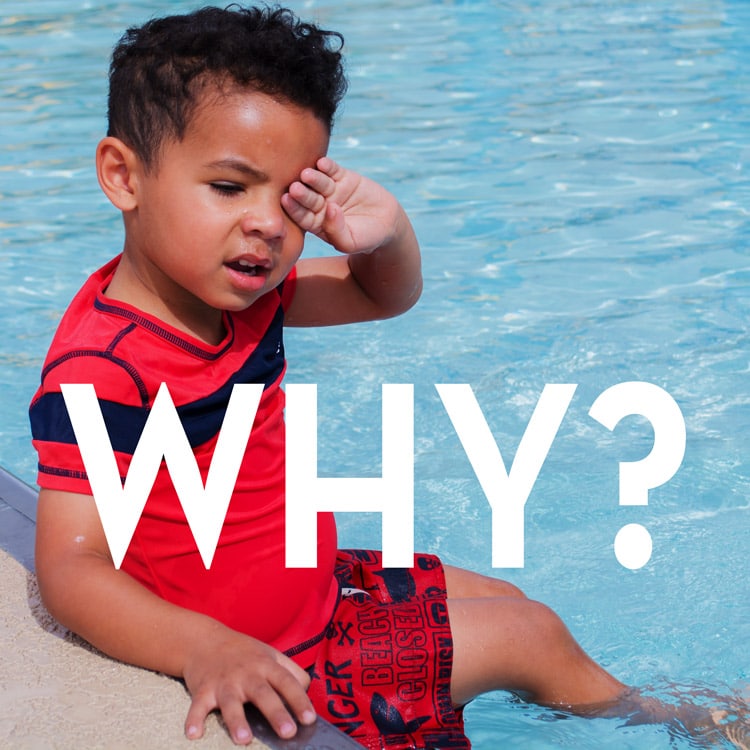
The child’s mind is a fascinating thing, its unyielding yearn to learn is a thirst that can’t be quenched. We either remember asking “why” or have memories of answering “why”. But this “phase” of asking why doesn’t stay forever we grow and change. I don’t necessarily think the “insatiable need to replenish our vocabulary” goes away as we grow older I just think our way of acquiring the information changes. Our brains adapt and find new avenues of gaining information. Both books or access to the internet means we don’t need to ask why anymore.
“Words are the means by which we think. If we have no words, we cannot have ideas.” (Janaro & Altshuler 2017)

I don’t agree with this in the slightest. Words are used to express what we think. I can think of something and not know the word for it. Words aren’t the essential building blocks that you require to think. Now I don’t think words aren’t used in thinking but, I don’t believe they are needed in order for you to think. Higher level thinking may need words to help progress such thoughts but, that’s not what is explicitly stated.
Citations:
Janaro, R. P., & Altshuler, T. C. (2017). The art of being human: the humanities as a technique for living (10th ed.). Boston: Pearson.
i.kinja-img.com/gawker-media/image/upload/s–yjP_d4L2–/199tki8jcwdbxjpg.jpg
This is an example post, originally published as part of Blogging University. Enroll in one of our ten programs, and start your blog right.
You’re going to publish a post today. Don’t worry about how your blog looks. Don’t worry if you haven’t given it a name yet, or you’re feeling overwhelmed. Just click the “New Post” button, and tell us why you’re here.
Why do this?
The post can be short or long, a personal intro to your life or a bloggy mission statement, a manifesto for the future or a simple outline of your the types of things you hope to publish.
To help you get started, here are a few questions:
You’re not locked into any of this; one of the wonderful things about blogs is how they constantly evolve as we learn, grow, and interact with one another — but it’s good to know where and why you started, and articulating your goals may just give you a few other post ideas.
Can’t think how to get started? Just write the first thing that pops into your head. Anne Lamott, author of a book on writing we love, says that you need to give yourself permission to write a “crappy first draft”. Anne makes a great point — just start writing, and worry about editing it later.
When you’re ready to publish, give your post three to five tags that describe your blog’s focus — writing, photography, fiction, parenting, food, cars, movies, sports, whatever. These tags will help others who care about your topics find you in the Reader. Make sure one of the tags is “zerotohero,” so other new bloggers can find you, too.

 Matt's Intro into the Humanities Blog


